






Compassion Comes in Small Packages Too
In my video this week, I mentioned that I’d been sick—and I still was.
Somehow, “video day” went smoothly.
The camera was on, my voice held out, and I honestly thought I was finally turning the corner on this terrible winter cold.
But I wasn’t.
What started as a simple cold moved into my chest and settled there. The cough got deeper. The fatigue got heavier. By last night, I knew I wasn’t just “a little under the weather” anymore.
Sometime after midnight I woke up coughing and couldn’t stop.
I tried to clear my lungs, but my strength was gone.
Every breath felt like work.
And that’s when something else showed up.
Fear.
As I sat there in the dark, another set of images pushed their way in—nights in my dad’s room during his last week of life, when pneumonia had taken hold and every breath was a struggle. Those memories weren’t gentle. They came rushing back fast.
Before long, I wasn’t just sick.
I was scared.
My chest was tight.
My heart was racing.
My thoughts were running ahead to places they didn’t belong.
What if this gets worse?
What if I can’t breathe?
What if…?
I could feel it—my mind wasn’t just thinking, it was spiraling. That restless feeling rose up inside: You need to figure this out right now. But in that moment, nothing was actually getting figured out.
My symptoms didn’t change.
My situation didn’t change.
The only thing getting bigger was fear.
And I realized I needed more than comforting words. I needed a way—right there at 2 a.m.—to take my thoughts back from the fear that was pressing in.
The Bible tells us, “Be strong and courageous. Do not be afraid; do not be discouraged, for the LORD your God will be with you wherever you go.” (Joshua 1:9, NIV)
But how do we do that when fear is loud and our thoughts are racing?
You do what I did last night–rise above the fear by taking thoughts captive with four faithful steps:
- Recognize the fear
Instead of arguing with your fear, bring it into the light and say it plainly:
“I’m afraid about my health.”
“I’m afraid about money.”
“I’m afraid about what tomorrow holds.”
When we recognize our fear, we stop letting it lurk in the shadows. We’re honest before God about what’s really going on in our hearts.
You might even say, “Lord, this is what I’m afraid of…” and tell Him directly.
- Interrupt with Scripture
Fear loves to talk. It runs “what if” after “what if.” And it doesn’t just talk—it lies. It exaggerates, distorts, and drags our thoughts toward the worst-case scenario.
Courage begins when we interrupt those lies with the truth of God’s Word.
Pick one verse that speaks directly to your fear—something simple enough to remember and repeat:
“Those who hope in the LORD will renew their strength.” (Isaiah 40:31, NIV)
“So do not fear, for I am with you; do not be dismayed, for I am your God.” (Isaiah 41:10a, NIV)
You don’t need ten verses. You just need one clear, steady reminder of who God is and what He has said. Say it out loud if you can. Let that verse interrupt the spiral as you meditate on it.
- Speak it in prayer
You don’t have to pray a long, polished prayer when you’re afraid. Sometimes all you can manage is one honest sentence—and that’s okay too.
“Lord, You’re here. Help me trust You right now.”
“Jesus, guard my mind and give me peace.”
“Father, I place this in Your hands.”
Short and real is enough. God isn’t measuring the length of your prayer; He’s listening to the heart behind it.
- End with one faithful step
Courage isn’t about fixing the whole situation at once. It’s about ending with one step that honors God.
Sometimes that step is practical—calling the doctor in the morning, asking for help, or making a needed decision.
But if it’s the middle of the night and you’re in bed, that faithful step might simply be:
“I’m going to stop rehearsing worst-case scenarios.”
“I’m going to rest and talk to God about this again in the morning.”
“I’m going to focus on what’s true, not what’s imagined.”
You can even remind yourself: “Right now, my job is to rest. God is still God in the dark.”
That one small step is an act of courage. It’s you choosing to trust the Lord with what you can’t control.
When fear rises, this is how you RISE:
Recognize the Fear. Interrupt with Scripture. Speak it in prayer. End with one faithful step.
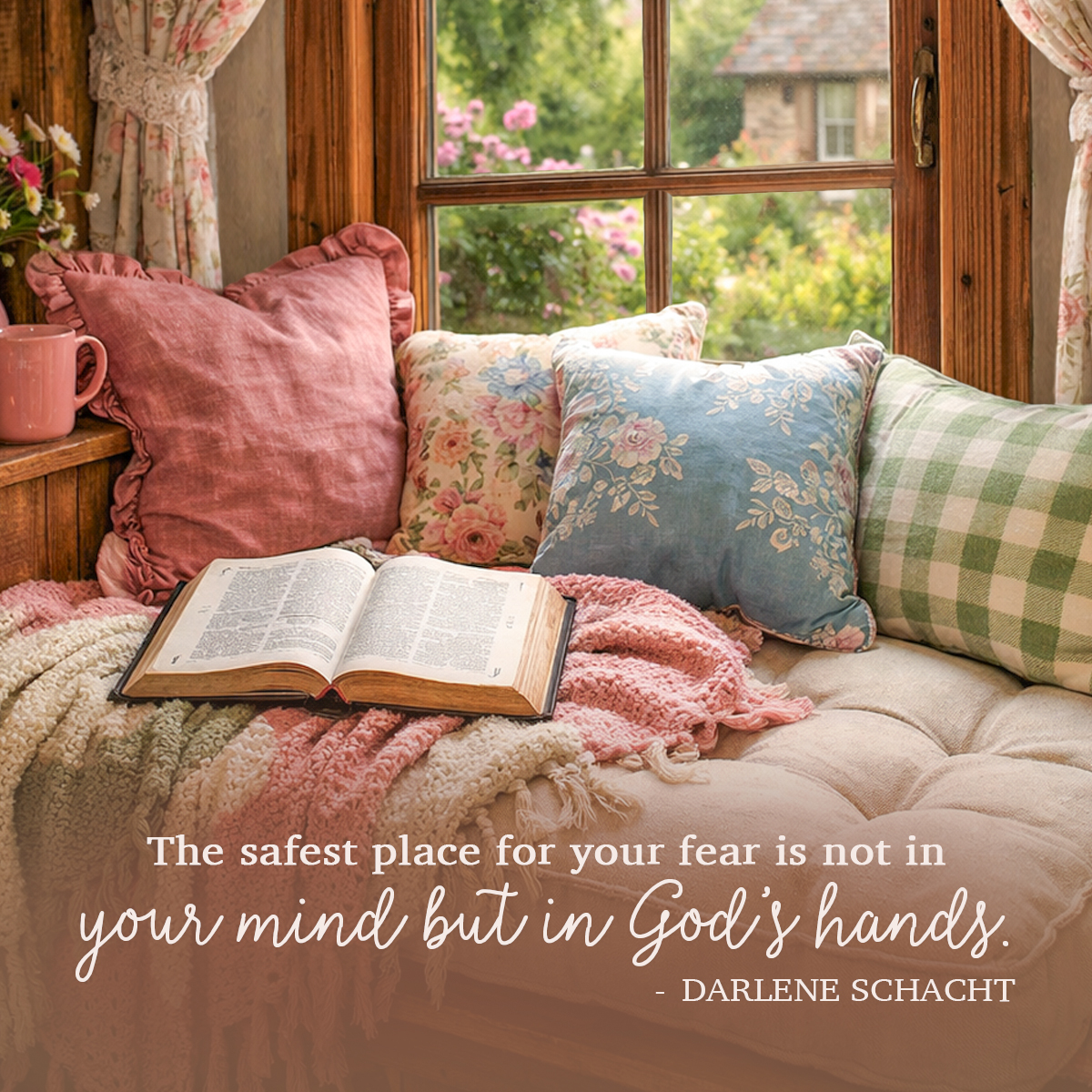
This Week’s Printable
Here is this week’s printable. Click the image to view and print a higher resolution.

0 Comments